
My dad was a builder. He was good at it. He also went bankrupt.
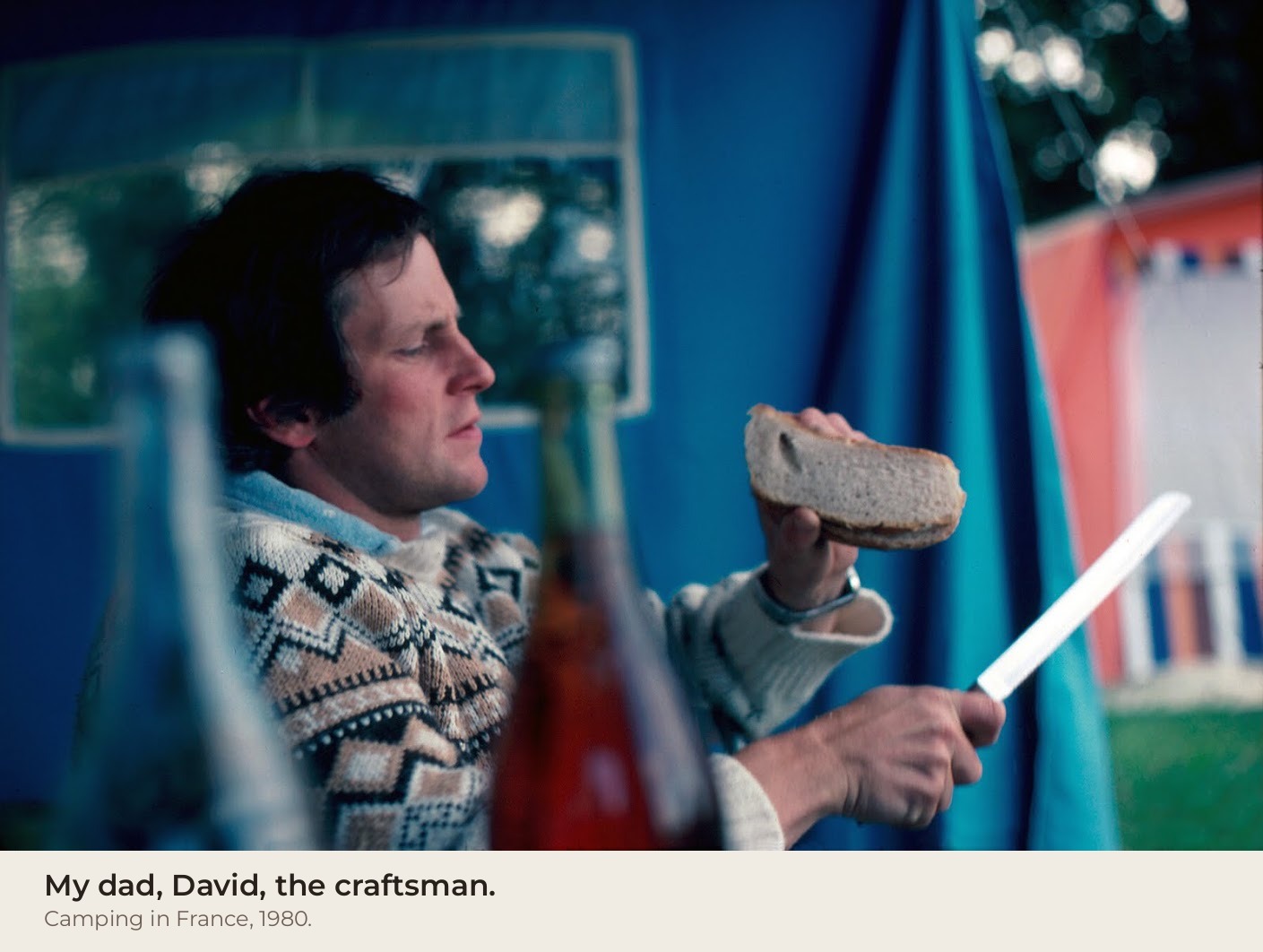
According to my mum, it wasn’t the work that sank him. It was that he wouldn’t chase people for the money they owed him. He’d done the job, done it properly, and then couldn’t bring himself to ask.
I didn’t understand that as a kid. I was just on site with him, meeting the people he worked with. Burt the chippy in his green, holey bobble hat. The company logo, Donbillda Ltd, done as a Spirograph pattern.
I understand it much better now, because he wasn’t unusual. Plenty of brilliant builders are the same: great at the work, hopeless at the asking.
The same pattern, online
I see a version of it every week on LinkedIn and on construction company websites. Firms doing proper jobs, then underselling them. A photo, a line, done.
When builders do talk about the work, it’s often with real technical fascination: the method, the kit, the tricky bit of setting out. That’s genuine and it’s interesting to other builders. But it rarely says what the work did for the client. It’s not asking for the credit, any more than my dad asked for the money.
I don’t think it’s modesty, exactly. The people who are best at building usually just want to get on with building.
Why it costs you work
The trouble is that the next client can’t see what happened on your last job. They weren’t there when you sorted out the drainage nobody had surveyed, or kept the neighbours on side, or finished a week early. If you don’t tell them, the firm with the better website gets the call, even if its work is no better than yours.
Case studies are, in a sense, a way of asking for the credit without the awkwardness. You’re not boasting. You’re explaining what the client needed, what was difficult and how you dealt with it.
How to show what the work did for the client
You don’t need to become a salesperson. A few habits help:
- Describe the client’s problem first. What did they need, and what were they worried about?
- Explain one decision and why you made it. That shows judgement, not just labour.
- Mention what went wrong and how you fixed it. Clients trust a firm that can handle problems.
- Ask the client for a sentence. Happy clients are usually glad to give one, and it says more than anything you can say about yourself.
- Get someone else to write it up if you’d rather be on site. That’s a perfectly good choice.
A question for builders and subbies
My dad never cracked it. If you’re a builder who has found a way to talk about your work, or chase what you’re owed, without it feeling like a betrayal of the job, I’d genuinely like to hear how.
For a step-by-step guide to turning a finished job into a case study that wins the next one, see How to Write Construction Case Studies That Win Work.
Get your projects written up properly
Takooba turns completed projects and happy customers into case studies that win the next job. See how it works or get in touch.
Michael Willoughby